Speakers
|
|
|
|
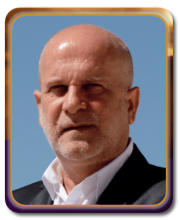
Agostinho Almeida (b. 1962) is a Professor at the Faculty of Pharmacy of the University of Porto, Portugal, in the areas of Analytical/Bioanalytical Chemistry and Instrumental Methods of Analysis, namely instrumentation, techniques and methodologies in the Clinical Laboratory1. He graduated in Pharmaceutical Sciences (1986), with a specialization in Clinical Analysis, and received a PhD degree in Analytical Chemistry (2000) from the University of Porto. He is a researcher at LAQV/REQUIMTE2, a Portuguese research centre for Sustainable Chemistry, where he leads a trace element analysis unit. His main research interests are trace elements in health and disease, with a focus on the development and validation of analytical procedures using inductively coupled plasma mass spectrometry and environmental, pharmaceutical, clinical/toxicological and forensic applications. He has authored over 160 scientific publications in peer-reviewed journals and presented more 100 lectures and oral communications.
Faculty of Pharmacy of the University of Porto |
|


|
ANA RITA LADO |
|
|
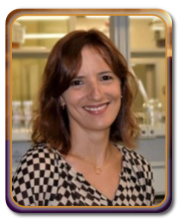
Ana Rita Lado Ribeiro (ARLR) is Principal researcher at Laboratory of Separation and Reaction Engineering – Laboratory of Catalysis and Materials (LSRE-LCM), Faculty of Engineering of the University of Porto (FEUP). Her research focuses on the environmental fate, behavior, and removal of contaminants of emerging concern, with a particular emphasis on chiral pharmaceuticals. She works on the development of LC-MS/MS methods to detect organic microcontaminants, occurrence and risk assessment studies, and water and wastewater treatment technologies. Her research interests also include antimicrobial resistance and ecotoxicological effects of chiral pharmaceuticals, as well as eco-friendly sample preparation techniques and the identification of transformation by-products in environmental matrices. ARLR co-authored more than 250 publications, including 10 chapters in books or in book series with peer review, more than 100 publications in international peer reviewed ISI indexed journals, and more than 150 communications in conference proceedings, having a h-index of 44. She has experience in leading projects (European Research Council (ERC) Starting Grant (ERA-ARE, Project Ref. 101039270; national financed projects (STAR, Ref. 2022.02842.PTDC, ongoing; SAMPREP, Ref. POCI-01-0145-FEDER-030521, concluded)). ARLR has participated as team member in several national and international research projects and is Portuguese representative in the Management Committee of Water4Reuse COST Action. Moreover, she is Executive Editor of Chemical Engineering Sciences (Elsevier) and Special Issues Editor of Chemical Engineering Journal Advances(Elsevier).
Faculty of Engineering of the University of Porto, LSRE-LCM, ALiCE |
|
|
BRUNO NUNES |
|
|
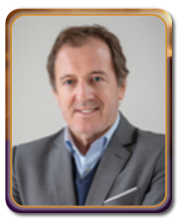
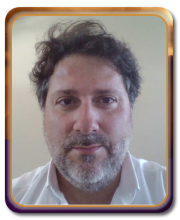
Bruno Nunes (BN) graduated in Pharmaceutical Sciences from the Faculty of Pharmacy (1999), and completed his PhD in Biomedical Sciences (2005), from Abel Salazar Institute of Biomedical Sciences, both from Porto University. Bruno Nunes as also a Habilitation degree, in Biology, obtained at the University of Aveiro (2020). BN was an assistant at Escola Superior de Saúde Jean Piaget (2004), and an assistant professor at Universidade Fernando Pessoa (UFP), until January 2013. BN has been an integrated member of CESAM since 2005. BN, h index = 26, 2377 citations, authored 116 research articles (published in international indexed peer reviewed journals, mostly as first, last or corresponding author; 78 papers since 2014), 3 book chapters, BN published 9 research articles in national journals. BN was invited for plenary talks in XIV ECOTOX (2016) and at SETAC Latin America 12th Biennial Meeting (2017). This strong record of publications shows that BN is one of the leading scientists in Europe in the field of drug ecotoxicology. BN participated in 13 scientific projects; among these, BN was the PI in three of them (one ongoing). BN was the PI and the special visiting researcher of a Brazilian project, and is now a member of Biodiversity Research Consortium Brazil-Norway project. BN was also the main promoter of an industry-oriented R&D project. BN supervised/supervises 1 post-doc, 6 PhD and 38 master students, 4 research initiation students, 13 monographs, 2 research technicians, 34 pre-graduate students, and 6 trainees. BN is an expert in both national and international organizations, including the Group of Veterinary Pharmaceuticals Evaluation (Agriculture Ministry); Agency for Innovation; European Food Safety Authority; Plant Phylogenetics & Conservation Group, Xishuangbanna Tropical Botanical Garden (XTBG), China; Agencia Nacional de Promoción Científica y Tecnológica, Ministerio de Ciencia, Tecnologia y Innovaccion Productiva, Argentina; Czech Science Foundation, Czech Republic; Research Foundation Flanders (FWO) panel ‘SB – Strategic Basic Research’, Belgium. BN is a reviewer of international journals (e.g. Chemosphere; Ecotoxicology and Environmental Safety; Archives of Environmental Contamination and Toxicology; Journal of Enzyme Inhibition and Medicinal Chemistry; Aquatic Toxicology; Chemistry and Ecology; Water Research; Water, Air, & Soil Pollution; Toxicology; International Journal of Environment and Health; Journal of Toxicology and Environmental Health) and as editor of international journals (e.g. Advances in Environmental Research; Global Journal of Environmental Science and Technology; Reviews of Environmental Contamination and Toxicology; Frontiers of Environmental Science).
|
|
 |
CRISTINA ALMEIDA |
|
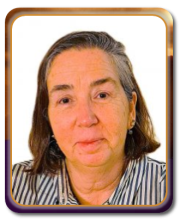
Cristina Almeida is an Associate Professor at the Faculty of Pharmacy of the University of Lisbon (FFUL), where she is responsible for several undergraduate and postgraduate teaching units, mainly in the field of bromatology and water quality. However, her career began in the pharmaceutical industry (quality control). She is currently a member of the Portuguese Pharmacopoeia Commission, a member of the College F3/UL, a member of the CT 72/SC 02 Technical Commission, a member of the ERSAR Microplastics Working Group and a member of the ECHA Risk Assessment Commission. Her research focuses on the implementation and validation of analytical methods for the monitoring of emerging contaminants (pharmaceuticals, microplastics) in water, in the framework of various projects she has coordinated (mostly funded by industry) or participated in. She is the author of dozens of articles, author/editor of books and book chapters and supervisor of numerous theses.
Faculty of Pharmacy of the University of Lisbon |
|
|
CRISTINA AZEVEDO |
|
|
Cristina Azevedo, PhD, is Director of the New Biopesticides Department at InnovPlantProtect, leading a research team developing bio-based solutions for major plant diseases. She holds a degree in Agricultural Engineering (ISA, Lisbon) and an international Master’s in Biotechnology, with her thesis completed at UC Davis, USA. She earned her PhD at the John Innes Centre (UK), where she contributed to the discovery of SGT1, a key regulator of plant disease resistance. At the MRC-LMCB (UCL, London), she expanded her expertise in biochemistry and identified a new post-translational modification, protein polyphosphorylation. She has published in high-impact journals, supervised MSc and PhD students, and collaborated with leading international institutions. At InnovPlantProtect, she manages projects that have resulted in four patent applications in biopesticides and biostimulants. She is also actively engaged in laboratory sustainability and science outreach.
InnovPlantProtect |
|
|
FÉLIX CARVALHO |
|
|
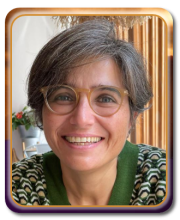
Félix Carvalho is Full Professor of Toxicology at the Faculty of Pharmacy of the University of Porto (FFUP) and researcher at UCIBIO/REQUIMTE. He currently serves as Vice-Director of UCIBIO, President of the Scientific Council of FFUP, President of the Portuguese Society of Pharmacology, and President-elect of EUROTOX. He is also a European expert at the European Medicines Agency (EMA), a member of INFARMED’s Committee for the Evaluation of Medicines, and of the Nanomaterials Expert Group (ECHA). His research focuses on Toxicology, particularly Mechanistic Toxicology. With over 30 years of experience, he has co-authored more than 400 scientific publications and book chapters, and is co-editor of books in the field of Toxicology. He is also a member of the editorial board of several international scientific journals.
UCIBIO, Faculty of Pharmacy of the University of Porto |
|
|
NUNO BORGES |
|
|
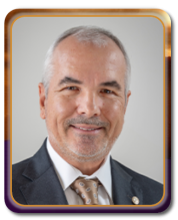
Nuno Borges is a nutritionist, graduated in Nutritional Sciences from the Faculty of Nutrition and Food Sciences of the University of Porto (FCNAUP), and holds a PhD in Human Biology from the Faculty of Medicine of the University of Porto. He has worked at various institutions throughout his academic and professional career, including the University of Kansas in the USA. Between 1995 and 1998, he worked as an assistant researcher at BIAL. As a researcher, Nuno Borges has published approximately 90 scientific articles in specialized journals, with a primary focus on the interaction between drugs and nutrients, particularly in the elderly population. He is currently an Associate Professor at the Faculty of Nutrition and Food Sciences of the University of Porto (FCNAUP) and president of the Scientific Council of this institution. He is also a Visiting Associate Professor in the Integrated Master's Program in Medicine at the University of Minho.
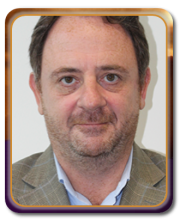
Faculty of Nutrition and Food Sciences of the University of Porto |
|
|
PAULA OLIVEIRA |
|
|
Paula A. Oliveira is Full Professor at the University of Trás-os-Montes and Alto Douro (UTAD) since December 2023. She graduated in Veterinary Medicine from UTAD in 1996, obtained a Master’s degree in Oncology from the University of Porto in 2001, and completed her PhD in Veterinary Sciences at UTAD in 2006. She achieved her Habilitation in 2010. During her PhD, supported by a fellowship from FCT – Fundação para a Ciência e a Tecnologia, she conducted research at UTAD, the University of Santiago de Compostela (Spain), and the Portuguese Oncology Institute. With over three decades of academic experience at UTAD, she has taught several disciplines, including Anatomy, Pharmacology, Therapeutics, Toxicology, and Animal Experimentation. Her research focuses on translational medicine, particularly on the development and analysis of animal models to study disease mechanisms, evaluate new therapies, and explore chemoprevention strategies, as well as on the biological effects of heavy metal exposure in animals. She has participated in nine funded research projects, seven of which supported by FCT, acting as Principal Investigator in two. She has extensive experience in postgraduate supervision, having supervised 16 PhD and 37 Master’s students. Paula A. Oliveira has an h-index of 34, with over 5,000 citations, and has authored more than 300 scientific publications in indexed journals, as well as book chapters and conference abstracts. She has delivered numerous invited lectures and received several scientific awards. She is a member of the editorial board of multiple international scientific journals and maintains active national and international research collaborations.
University of Trás-os-Montes and Alto Douro, CITAB |
|
|
RITA JORGE |
|
|
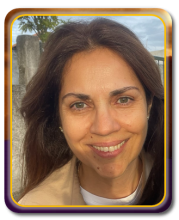
Rita Jorge is a scientific analyst in synthetic drugs at the European Union Drugs Agency (EUDA). She holds a PhD in Chemistry from Queen Mary, University of London. Her work focuses on monitoring and analysing illicit drug markets in Europe, with particular emphasis on synthetic drug production in Europe, and the role of chemical precursors in these processes. Prior to her current role, she has worked at the science–policy interface across several organisations in the UK, where she conducted evidence reviews, managed research activities, and contributed to translating scientific knowledge into policy-relevant outputs. At EU level, she has also been closely involved in the EU Early Warning System, contributing to the identification, monitoring, and risk assessment of new psychoactive substances at European level.
European Union Drugs Agency (EUDA) |
|
|
TERESA TAVARES |
|
|
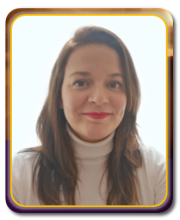
Teresa Tavares is a Chemical Engineer, Porto University, 1982, and after spending one year as Production Engineer in the Aromatics Unity at the Petrogal Refinery in Leça da Palmeira, Portugal, started her research career in the Research Labs of Engineering Sciences of the University of Minho and later in the Centre of Biological Engineering, CEB, of the same University. Defended her Master’s thesis in Materials Sciences in 1986 and her PhD thesis in Heterogeneous Catalysis in 1991. Most of her thesis on the production, characterization and optimization of bi-metallic catalysts for SNG production was prepared in Haldor-Topsøe A/S, Denmark. At present, she is an associated professor with tenure at the University of Minho and at CEB she is responsible for the Chemical Engineering Lab within the Env2B group, also under her responsibility. Her research focus has been the Rehabilitation of Contaminated Systems through Biosorption, Biodegradation and Environmental Catalysis, within a Circular Economy perspective. The Biorecovery of strategic resources as rare-earth elements is also one of her research focuses. Nowadays, the Centre of Biological Engineering, rated as Excellent by FCT, is part of LABBELS, an Associate Laboratory on Biotechnology, Bioengineering and Microelectromechanical Systems. She is or has been the leading researcher of 10 Research Projects with financial support from national and international institutions. She has supervised circa 40 Master’s dissertations and 15 PhD theses. Published 1 book, 10 book chapters, 100 peer-reviewed papers in international journals and 120 communications/posters in international conferences. Her researcher ID profile indicates more than 4700 citations, with circa 70 citations per year during the last 5 years. It also indicates an h-index of 42. She has assumed several institutional responsibilities such as Director of the Master Program in Chemical and Biological Engineering, Associate Director of the Centre of Biological Engineering, Member of the Scientific Steering Committee of the Centre of Biological Engineering, Director of the PhD Program in Chemical and Biological Engineering, Member of the Scientific Steering Committee of the Department of Biological Engineering, Vice-Head of the Department of Biological Engineering, Member of Program Studies Steering Committee of the PhD Program in Chemical and Biological Engineering.
University of Minho, Environmental Bioresources and Bioremediation Technology Research Group (Env2B) |
|
|
TONY WALKER |
|
|
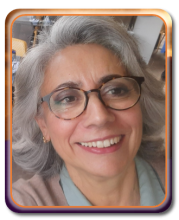
Dr. Tony Walker is a Professor at the School for Resource and Environmental Studies, Dalhousie University in Canada. Tony has studied the impacts of plastic pollution for over 30 years. His first exposure to the devastating impacts of plastic pollution was removing plastic nets, rope and packaging bands from entangled Antarctic fur seals in Antarctica in the early 1990s. Since then, he has become increasingly involved in research and helping to develop policies to help curb plastic and microplastic pollution. He helped participate in a Leaders and Experts Roundtable on Plastics and Marine Litter to help develop the Ocean Plastics Charter for Canada’s 2018 G7 presidency. He participated in the Canadian Science Symposium on Plastics to inform represented Canada at the G7 Science Meeting on Plastic Pollution in Paris, France. He has published extensively on policies to reduce the impact of plastic pollution. He was Associate Editor for Marine Pollution Bulletin for five years and is currently an Editor for Cambridge Prisms: Plastics.
Dalhousie University, Canada |
|
|
VÍTOR VASCONCELOS |
|
|
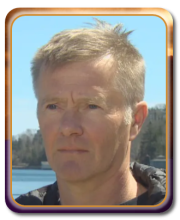
PhD in Biology at FCUP, Porto. Full Professor - Faculty of Sciences of Porto University and director of CIIMAR - Interdisciplinary Center of Marine and Environmental Research. Member of the Scientific Council of the Portuguese Science and Technology Foundation (FCT) – Natural and Environmental Sciences. Member of Scientific Council of the National Natural History Museum of France. Director of the Group of Blue Biotechnology and Health of CIIMAR. Main research focus on cyanobacteria secondary metabolites and their uses: toxins and molecules with biotechnological applications. Responsible for the LEGE culture collection with more than 2000 strains of cyanobacteria and microalgae. Director of the Doctoral Program in Marine Biotechnology and Aquaculture (U Porto and U Minho). Project evaluator of the Innovation Agency and various international research funding institutions Faculty of Sciences of the University of Porto, CIIMAR |
|